Did you know your nostrils play a vital role in how well you breathe? Your two nostrils can be different sizes. The nasal septum divides a normal nasal cavity into two halves. Ideally, this separation is usually equal. However, in 80% of people, the nasal halves aren’t divided equally.
When one side of the nasal cavity is larger than the other, it’s called a deviated septum. A deviated septum can cause issues while you sleep, making breathing difficult and potentially leading to certain cold symptoms.
Deviated Septum Causes and Complications
A deviated septum occurs when the thin wall between your nasal passages, called the nasal septum, shifts to one side of the nose, making it off-center.
This may not sound bad, but in more severe cases, a deviated septum can block one side of the nose or reduce airflow, causing breathing difficulties, especially while you sleep.
- Symptoms – A deviated septum can obstruct one or both of your nostrils. The blockage may make breathing especially difficult. Breathing can be exceptionally difficult, especially when you have a cold or an allergic reaction. The surface of your septum can also become dry with a deviated septum, which may lead to nosebleeds. Though not very likely they have been some complaints that a deviated septum can cause pain in your face. Your nose may develop a cycle that alternates between obstruction on one side and then the other, called a nasal cycle. Your breathing may be difficult and quite noisy while you sleep, and a deviated septum can often lead to snoring.
- Causes – We have explained exactly what causes a deviated septum. However, there are a few reasons you may get a deviated septum. Firstly, the condition may be hereditary and present at birth. You may also have suffered a nose injury that caused the septum to deviate or shift out of position.
- Risk Factors – Most often, a deviated septum is caused by an injury. So, when you play contact sports, wear proper protective gear, and when driving, wear your seat belt.
- Complications – When you have a severely deviated septum, it can cause nasal blockage, which may cause your mouth to become dry and lead to chronic mouth breathing. It can also cause pressure or congestion in your nasal passages, disturbing your sleep because you can’t breathe well. A deviated septum may also cause snoring, irritating your partner sleeping next to you or, if loud enough, the rest of the household.
- Prevention – If you do not have a hereditary deviated septum, I suggest you follow these measures. It’s best to protect your nose. So when you play any contact sport, always wear a helmet to protect your nose. When you drive in a motorized vehicle, always wear a seat belt.
Sleeping with a Deviated Septum
When you have a deviated septum, sleeping on one side of your body is usually much easier than on the other or on your back. It can cause you to breathe loudly and snore when you sleep on your side. Sleeping on your back is also often recommended for people with a deviated septum. These positions make it easier to breathe during the night.
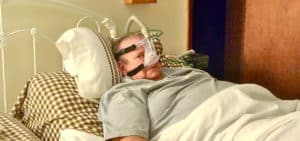
In more severe cases of a deviated septum, your doctor may prescribe a CPAP mask or a full-face mask to help you breathe easier while sleeping. In that case, you’ll need a specialized pillow to accommodate the facial mask or the CPAP machine.
When looking for the best pillow for a deviated septum, I suggest pillows ideally suited for sleeping on your side or back. Support your head and neck with slightly firmer loft. Cervical and contoured pillows are ideal because they support you when sleeping on your back or side and make breathing easier.
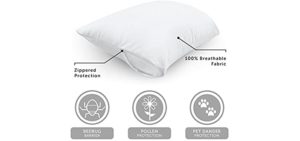
The last thing you want when you have a deviated septum is an allergic reaction. I also recommend choosing a pillow with a hypoallergenic cover.
Features of a Good Pillow for A Deviated Septum
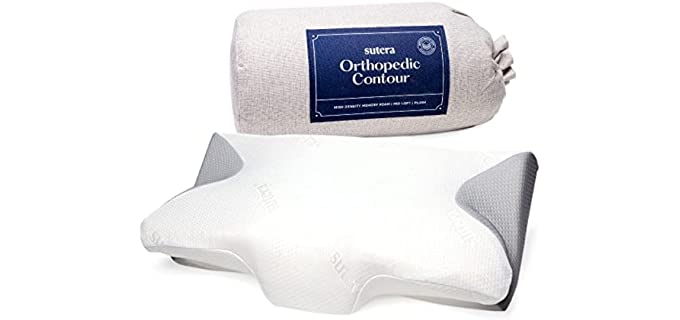
- Type – As I’ve mentioned, the cervical or contoured pillow is your best option when you have a deviated septum. Look for orthopedic-style pillows that support your neck and your head properly.
- Firmness – Choose a firm or medium-firm pillow. I wouldn’t go for a very soft pillow. Look for pillows filled with memory foam or latex. You can also look for a gel-infused memory foam pillow or a gel layer with a cooling effect.
- Loft – Look for a pillow that isn’t as high when sleeping on your back; sleeping on your side generally requires a medium to soft pillow. Sleeping on your back requires a much lower pillow than sleeping on your side.
- Cover – Make sure your pillow cover is removable and washable to prevent dust mite and allergen buildup. Look for breathable, moisture-wicking covers, such as natural cotton or bamboo covers.
Reviews: The Best Pillows for A Deviated Septum
1



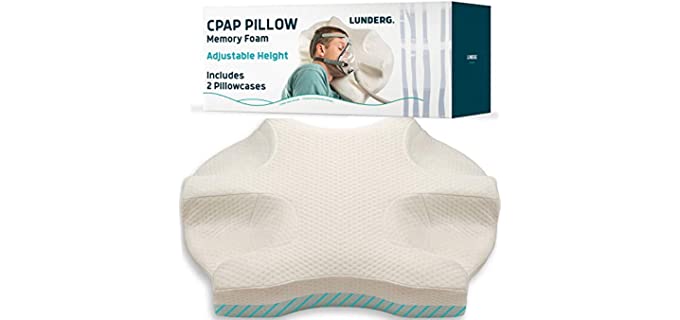
- The Lundberg is a CPAP pillow for when you need to use a CPAP machine for a deviated septum.
- This adjustable memory foam pillow suits all sleeping positions.
- It reduces air leaks and pressure while sleeping with a CPAP machine.
- The pillow has a cooling fabric cover.
2


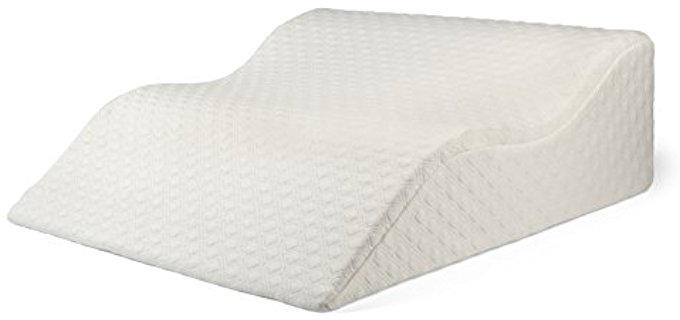
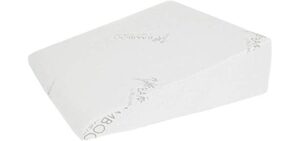
- The Aeris Wedge pillow keeps you more upright to improve breathing.
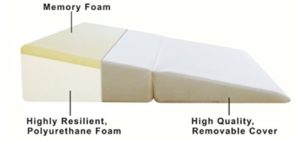
- It is a memory foam wedge-style pillow.
- The pillow has a comfortable and washable bamboo cover.
- It is also ideal for acid reflux.
3


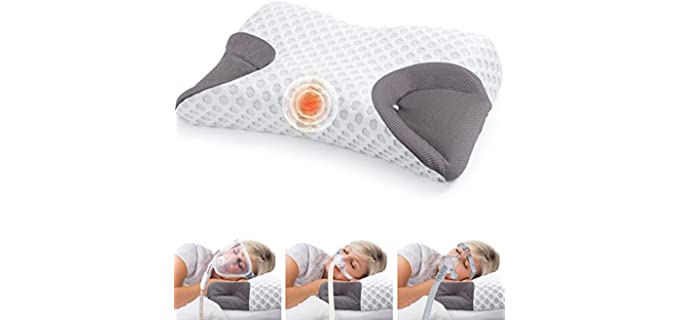
- The Ikstar pillow is also a CPAP machine pillow that works with a CPAP machine or facial mask for a deviated Septum.
- It has a firmer memory foam fill and a durable cover.
- The pillow offers mid-firm support and a breathable, washable cover.
- It is compatible with any CPAP face mask.
4


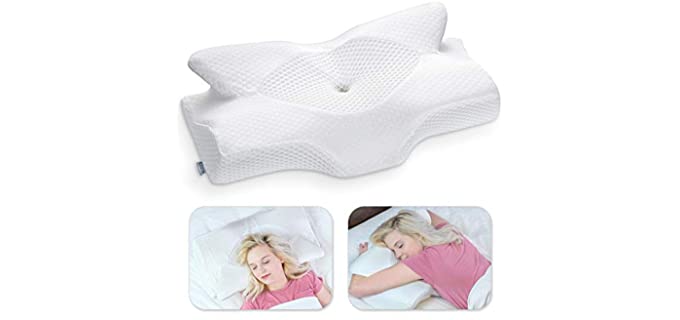
- The Elviroa Cervical Pillow is also ideal for a deviated septum. Its supportive design improves neck support and breathing.
- The pillow is ideal for side, back, and stomach sleepers.
- It has a memory foam fill and a removable cover.
5


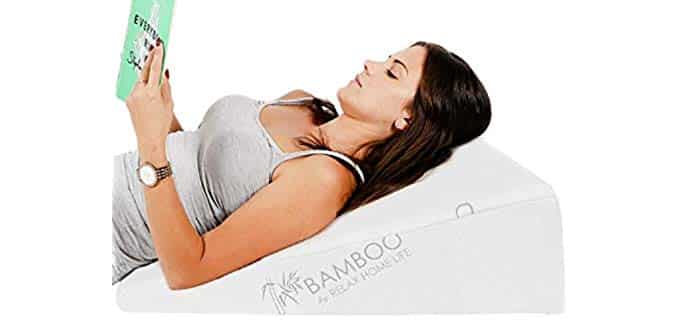
- From Relax Home Life, I have chosen another wedge-style pillow for support when you have a deviated septum.
- The pillow has a cool bamboo viscose cover.
- It allows you to sleep in a more comfortable position.
- The fill is a softer shredded memory foam.
”6″
The Cushion Lab Pillow is an ergonomically contoured pillow ideal for a deviated Septum.
It has Cloud support, softer cushioning, and an anti-aging pillowcase.
The pillow has a cervical shape for gentle neck and head support.
It supports your shoulders and your spine.
[/super_list]
Index Table: Top Rated Pillows for A Deviated Septum
| No. | Product | Image | Features | Brand | Score |
|---|---|---|---|---|---|
| 1 | Lunderg CPap - Pillow for A Deviated Septum |  |
| Lunderg | 98 |
| 2 | Aeris Wedge - Pillow for A Deviated Septum | 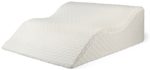 |
| Aeris | 97.9 |
| 3 | Ikstar CPap - Pillow for A Deviated Septum | 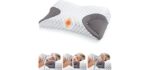 |
| Ikstar | 97 |
| 4 | Elviros cervical - Cervical Pillow for a Deviated Septum | 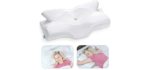 |
| Elviros | 97 |
| 5 | Relax Home Life Wedge - | 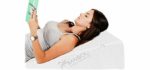 |
| Relax Home Life | 97 |
| ”6″ | ”Cushion ”Deep - ”Pillow |
| ”Cushion | - |